• Hablamos Español
• No Recovery = No Fee
• Free Consultations
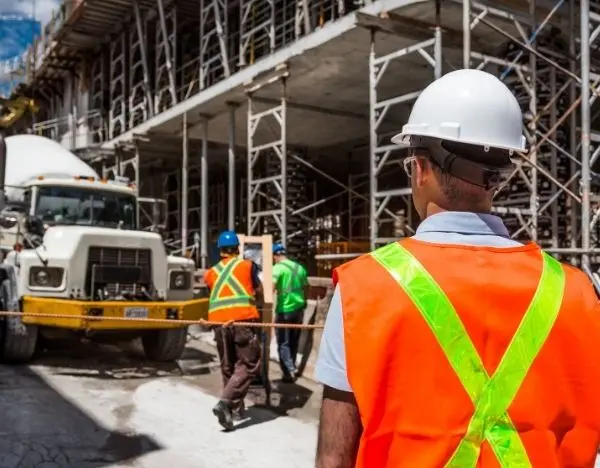
Construction sites are among the most dangerous places to work in New York City, and the density of the city makes it worse. Crews stack on top of each other, material moves overhead all day, and the work happens feet from traffic and pedestrians. If you were hurt on a job site, what you do in the first days shapes what you are able to recover later.
Call us at (212) 732-4992 24/7 to arrange to speak with a personal injury lawyer about your case, or contact us through our website today.
At Korman Lynch Lustig & Sassower, we represent injured construction workers across the five boroughs. The steps below protect your health first and your claim second, in that order, because the two are connected. Here is what to do if you are injured on a construction site.
Get treated the same day, even if you think you can walk it off. Head injuries, internal injuries, and disc injuries frequently do not announce themselves at the scene, and a worker who goes back to the job and sees a doctor a week later hands the insurance company its first argument.
Tell every provider that the injury happened at work and describe how it happened. Report every symptom, not only the worst one, because the complaint you leave out on day one becomes the injury the carrier disputes on day two hundred. Then follow the treatment plan you are given. Gaps in treatment are the most common reason benefits get cut off.
Tell your supervisor or your employer, and put it in writing. A text or an email you keep a copy of is enough. Telling a foreman in the hallway is not the same thing, and it is the gap we see most often in these files.
New York generally requires written notice to your employer within thirty days of the accident, and a workers' compensation claim filed with the state within two years. Ask for a copy of the accident report the company prepares, and read it before you sign anything. If the report describes the accident inaccurately, say so in writing.
Job sites change fast. The ladder gets put back in the pile, the opening gets covered, the scaffold comes down, and the plank that broke is gone by Monday.
Photograph the equipment, the location, and the conditions, including what was missing: no netting, no guardrail, no harness anchor, no barricade. Get the names and phone numbers of the coworkers who saw it, because crews rotate to other jobs and become impossible to find. Keep the clothing and boots you were wearing. Write down the time, the weather, who was supervising, and which companies were working in that area.
Most injured workers are told about workers' compensation and nothing else. Compensation pays your authorized medical treatment and part of your lost wages regardless of who caused the accident, and it generally bars a claim against your own employer.
What it does not pay for is pain and suffering, and it replaces only a capped fraction of your income. That gap is closed by a separate case against someone other than your employer, which on a construction site frequently means the property owner and the general contractor. New York's construction safety law places strict duties on owners and contractors for falls from heights, falling material, and the safe condition of the work site, and those duties do not depend on proving anyone was careless.
Our construction accident lawyers look at both tracks together, because the workers' compensation claim and the injury case interact in ways that can cost a worker benefits if they are handled separately.
Do not give a recorded statement to any insurance company before you talk to a lawyer, and do not sign a release or an authorization because someone tells you it is routine.
Stay off social media about the accident and about your recovery. A single photograph with no context gets pulled out two years later and used against months of medical records. Any communication about the injury should go through our office.
The first thing we do is send written demands to preserve what proves the case: site video, the equipment involved, daily logs, safety meeting sign-in sheets, inspection records, and the contracts that show which company controlled the work. The companies on the other side already have investigators on site. This is how an injured worker catches up.
A typical job site involves an owner, a general contractor, a construction manager, several subcontractors, equipment rental companies, and sometimes a public agency. Each one usually carries its own insurance. Finding all of them is what separates a limited claim from a recovery that reflects what the injury actually cost.
Where a public agency owns the project, a formal notice of claim is generally due within about ninety days, which is explained on our municipal liability page.
These two claims run on different clocks and different rules. The compensation carrier is repaid part of what it spent out of any recovery, and settling an injury case without handling that properly can end the medical benefits a worker was counting on. We run both so nothing falls between them.
The calls, the recorded statement requests, the examinations by doctors the carrier selects, and the early offers all come to us instead of to you. We prepare you for the examinations rather than sending you in cold, and we answer the reports that follow.
We prepare every file as if a jury will hear it, and we work with treating physicians, engineers, economists, and life care planners to put the full picture in front of the other side. Settlement on the right number is welcome. Settlement on a number that shortchanges a client is not.
Height, heavy equipment, live electricity, and crews working on top of each other produce the same injuries over and over:
The financial side follows the physical one. Medical bills arrive while the paychecks stop, and a worker who cannot return to the trade is facing a different career, not a few weeks off.
No lawyer can tell you what a case is worth before the medical picture is clear, and anyone who quotes a number early is guessing. What the law allows a jury to consider includes:
What a case is ultimately worth turns on the severity and permanence of the injury, the consistency of the medical record, the strength of the liability proof, the insurance available on the project, and how ready each side is to try the case.
The job site will look different next week, and the records that prove what happened are easiest to reach right now. Contact Korman Lynch Lustig & Sassower for a free consultation about your construction accident. There is no fee unless there is a recovery.
Call us at (212) 732-4992 24/7 to arrange to speak with a personal injury lawyer about your case, or contact us through our website today.
You are generally required to give your employer written notice within thirty days of the accident and to file a claim with the state within two years. A separate injury case against someone other than your employer runs on its own deadline, usually three years, and far shorter when a public agency is involved. Have the dates confirmed rather than estimated.
Often more than one party, and usually not only your employer. Property owners, general contractors, construction managers, subcontractors, equipment and rental companies, and manufacturers can all share responsibility depending on who controlled the work and what failed. New York's construction safety law places strict duties on owners and general contractors for falls from heights, falling material, and the safe condition of the work site, which is why these cases frequently reach companies that never touched the equipment involved.
Usually not. In exchange for benefits that come regardless of fault, New York generally bars a claim against your own employer. The case that matters is the one against the other companies on the job, and it reaches the losses compensation does not cover.
Ask anyway. Workers labeled independent contractors are regularly found to be covered employees, because what controls is how the work was actually directed rather than what a company called you. Being paid in cash does not eliminate coverage, and immigration status does not affect your right to benefits or to bring an injury claim.
Not reporting the injury in writing, waiting to get treated, letting gaps open in treatment, giving a recorded statement to an insurance company, signing paperwork without reading it, posting about the accident online, and assuming workers' compensation is the only claim available. Each one is avoidable.
Attorney Advertising | Prior results do not guarantee a similar outcome. The information on this website is for general information purposes only. Nothing on this site should be taken as legal advice for any individual case or situation. This information is not intended to create, and receipt or viewing does not constitute, an attorney-client relationship. This site is protected by reCAPTCHA and the Google Privacy Policy and Terms of Service apply.